100 Stock Car Racing "What Ifs": Evernham's Evolution

Nascar has a long and storied history, but it also has a past littered with “What If?” questions.  Join author Mike Mackler as he takes a look back at stock car racing’s 100 most-intriguing hypotheticals in “100 Stock Car Racing ‘What Ifs’”, the book available on Amazon in both Paperback and Kindle formats.  Here’s a preview of one of the one hundred “What If” questions asked throughout the book:

29. What if Ray Evernham never left Hendrick Motorsports?

Nascar's 90's Dream team
Background: By the end of the 1999 season, Ray Evernham had won three Cup championships as crew chief for Jeff Gordon at Hendrick Motorsports.  But a new challenge awaited him.

What Actually Happened: The ever-ambitious Evernham was soon tabbed to head Dodge Motorsports’ return to Nascar, starting his own team in Evernham Motorsports to do so.

What Could Have Been the Turning Point: What if Rick Hendrick had made an offer so lucrative to Evernham that it would have been too difficult to leave?

What COULD Have Happened: Jeff Gordon would go on to win the 2001 Cup championship with new crew chief Robbie Loomis, but that would be the last one in his illustrious career.  How many more championships would Gordon have won with Evernham still atop the pit box?
Dodge's return--led by Ray Evernham

And if THAT Happened…: On the flip-side, both Gordon and Evernham are hard-driving, demanding people who’ve used their personalities to fuel their successful careers.  It remains to be seen if the two could have continued to co-exist without wondering if they could do so without the other—or without driving each other crazy.

What Else Could Have Happened: Would Dodge’s return to Nascar have been as successful without Evernham’s leadership?  Possibly, but obviously a major variable would have been who was chosen to be the owner of the lead team.  Roger Penske’s teams would surpass Evernham’s for Dodge in the coming years, but it remains to be seen if Dodge could have convinced a top-flight, successful team to partner with them on such a risky venture from the get-go.

Why It Had to Turn Out The Way It Did: Evernham and Gordon both succeeded on their own, and likely had to find out first-hand if they could do so in order to be satisfied professionally.


100 Stock Car Racing "What Ifs": Vibration Variations

Nascar has a long and storied history, but it also has a past littered with “What If?” questions.  Join author Mike Mackler as he takes a look back at stock car racing’s 100 most-intriguing hypotheticals in “100 Stock Car Racing ‘What Ifs’”, the book available on Amazon in both Paperback and Kindle formats.  Here’s a preview of one of the one hundred “What If” questions asked throughout the book:

71. What if start-and-park operations were outlawed?

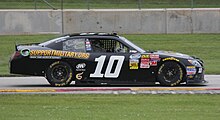
Blank white car--the uniform of the
start-and-parker
Background: By the mid-2000’s “field fillers” (teams that would only run a race if they were guaranteed a starting position due to a lack of entries) gave way to “start and park” operations—teams that would strive to qualify for a race, then intentionally drop out early on with spurious claims of mechanical issues.

What Actually Happened: Lower-rung teams—particularly in the Nationwide/Xfinity Series—realized that they could turn a bigger profit by running a small number of laps in a race, saving equipment for future races in which they could do the same.  This was aided by a pay structure that saw little difference in the payouts for last place and mid-pack finishes.

What Could Have Been the Turning Point: What if Nascar put rules in place (say, a rule stating that any team had to complete more than 80% of a race three weeks in a row) to ban start-and-park teams from doing so?

What COULD Have Happened: Nascar would have likely been stuck with a number of short fields, especially in the Nationwide/Xfinity and Cup Series.  Teams simply weren’t willing to burn through fuel, tires, and possibly other equipment like sheet metal and engines in order to make a few hundred dollars more on a race weekend, and would have likely just stayed home.
Jeff Green, nowhere near the lead

And if THAT Happened…: Several drivers wouldn’t have become infamous as start-and-parkers.  Joe Nemechek wouldn’t have been labeled “Last-Row Joe”, and Jeff Green would never have been able to exploit his past-champion’s provisional in the Nationwide/Xfinity Series.  However…

What Else Could Have Happened: …NEMCO Motorsports, Leavine Family Racing, and others have funded themselves in their earliest years by start-and-parking, not just pocketing the money but using it to build their teams into more-legitimate full-time operations.  NEMCO became a race-winning operation in the Truck Series, while LFR is one of the most-successful smaller teams in the Cup Series over the past few years.  None of this may have been possible without the ability to start-and-park in their early days.

Why It Had to Turn Out The Way It Did: Whether it was due to TV commitments or to avoid embarrassment, Nascar was steadfastly against short fields for most of the 21st century, and was willing to look the other way when start-and-parkers would help them out.


100 Stock Car Racing "What Ifs": Ironhead's Image

Nascar has a long and storied history, but it also has a past littered with “What If?” questions.  Join author Mike Mackler as he takes a look back at stock car racing’s 100 most-intriguing hypotheticals in “100 Stock Car Racing ‘What Ifs’”, the book available on Amazon in both Paperback and Kindle formats.  Here’s a preview of one of the one hundred “What If” questions asked throughout the book:

32. What if Dale Earnhardt Sr.’s car wasn’t black?

One Tough Customer
Background: Upon GM Goodwrench Service taking over for Wrangler as his primary sponsor, Dale Earnhardt Sr. gained an iconic new paint scheme—black, with white, red, and silver accents.  But it wasn’t always going to be that way.

What Actually Happened: According to Richard Childress, GM came to him with a suggested paint scheme “that looked like a box of ACDelco brakes”—mostly blue with white accents.  He requested the chance to have his team design their own scheme, which was granted.

What Could Have Been the Turning Point: What if GM’s marketing team had simply said “its our money, we’ll choose the paint scheme”?

Dale's 1996 Japan racecar--what might
have been?
What COULD Have Happened: A handy way to divide up Dale Earnhardt’s career would have been lost—the blue-and-yellow Wrangler years as “Ironhead” and the black-car run as an iconic legend not just of Nascar, but of American culture.

And if THAT Happened…: Think of all the Dale Earnhardt merchandise you’ve seen.  Think of all the t-shirts, the hats, the jackets, the plastic trinkets, the can coozies.  Now imagine all of them in blue.  Strange, isn’t it?

What Else Could Have Happened: The color of the car likely had little to nothing to do with Dale Earnhardt’s on-track success, but it likely DID help with his off-track marketing.

Why It Had to Turn Out The Way It Did: Dale Earnhardt was always The Man in Black—he just needed a car to fit that image.